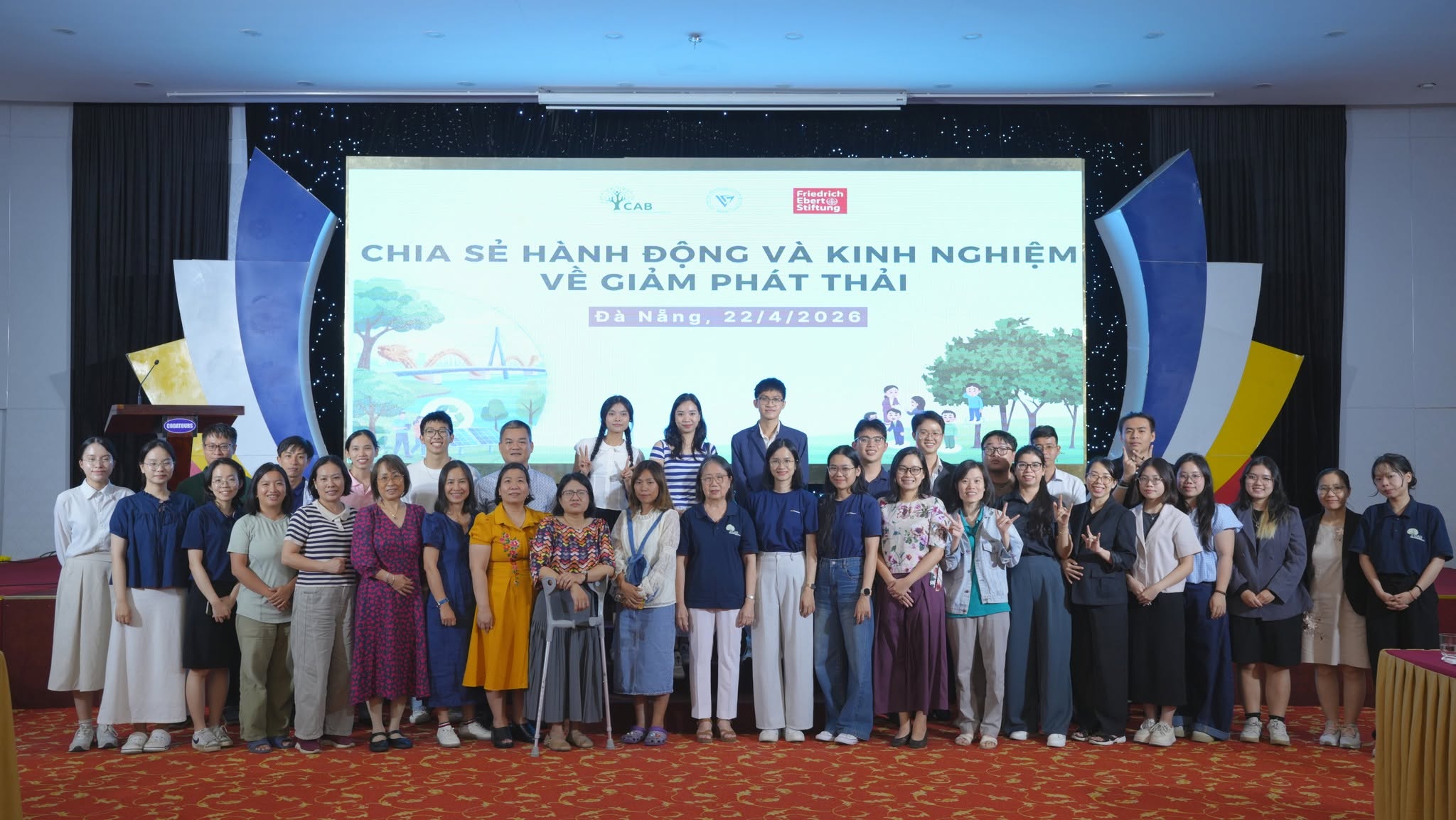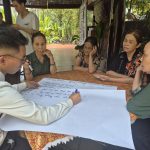
In the context of Vietnam in general and Da Nang in particular advancing green transition strategies, CAB Vietnam, in collaboration with Liên hiệp các Hội Khoa học và Kỹ thuật Đà Nẵng and Friedrich-Ebert-Stiftung Vietnam Office, organized the workshop “Sharing Experiences and Actions on Emission Reduction” on the morning of April 22.
The event brought together nearly 50 participants from government agencies, businesses, civil society organizations, youth groups, workers from local communities and jounalists.
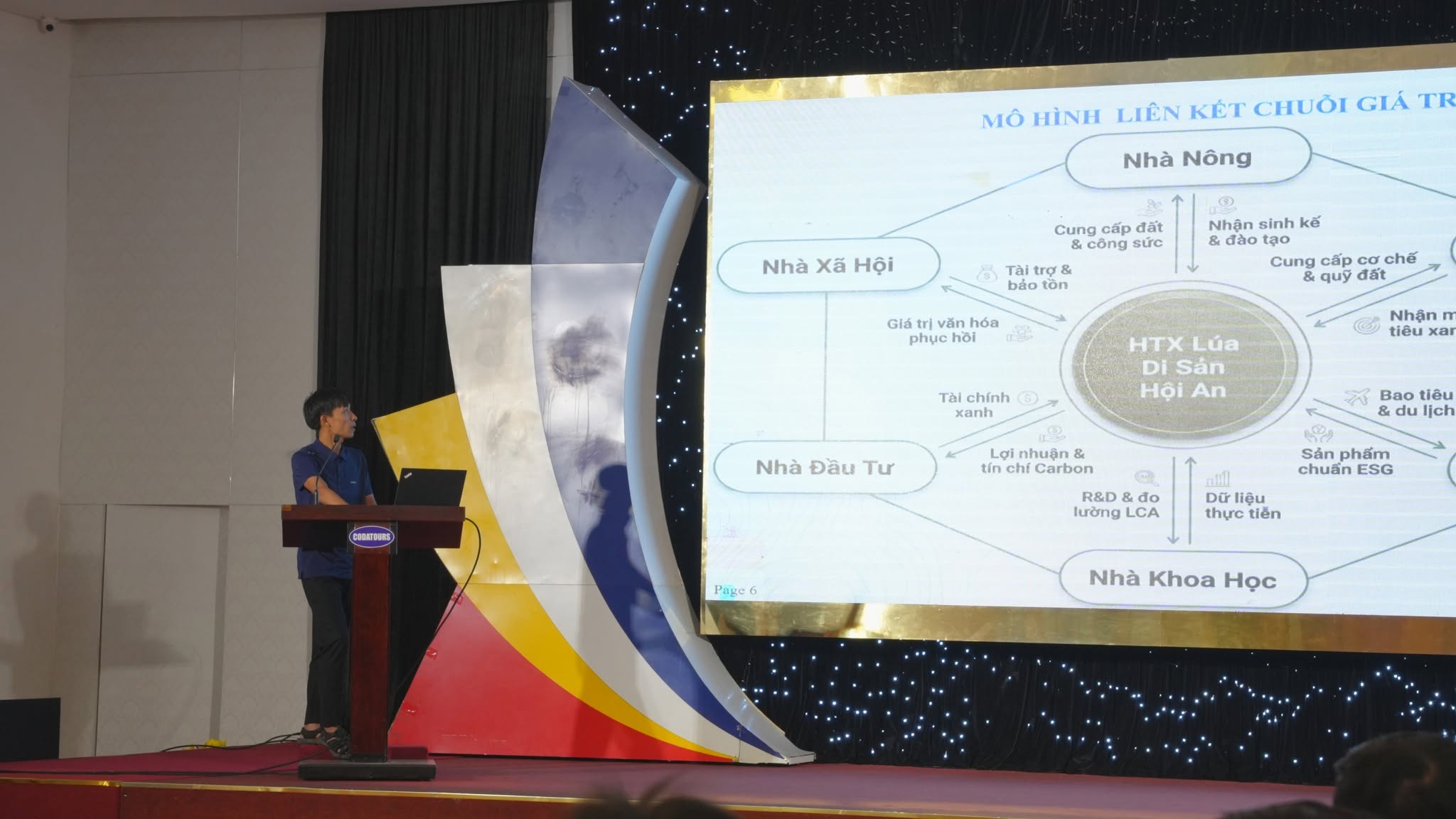
At the workshop, the story of young people and green agriculture shared by Nguyễn Văn Nhân from the Hội An Heritage Rice Cooperative deeply resonated with many participants. According to Mr. Nhân, the cooperative’s nine-year journey to restore the wet rice ecosystem was not driven by advanced technologies, but by trust in indigenous knowledge. He shared: “In agriculture, people are the most important factor; techniques can be transferred, but awareness must come from the heart.”
Another inspiring story came from members of Green Youth Hub through the initiative “Community Learning Tourism for Emission Reduction.” Following study visits and learning trips to the Hòa Bắc area, young people from the former Green Youth Lab network and the current Green Youth Hub expressed their desire to collaborate with the Hòa Bắc Ecological Agriculture and Community Tourism Cooperative to develop a low-emission community-based learning tourism model. The initiative is expected to become a practical learning space where young people can better understand resource conservation and their responsibility toward future generations.
In addition to youth-led stories, the workshop also featured in-depth discussions on “Green Jobs & Decent Work” by Nguyễn Ngọc Duyên and on the Extended Producer Responsibility (EPR) Policy by Nguyễn Văn Phan. These sessions provided participants with further insights into laws and policies related to sustainable development.
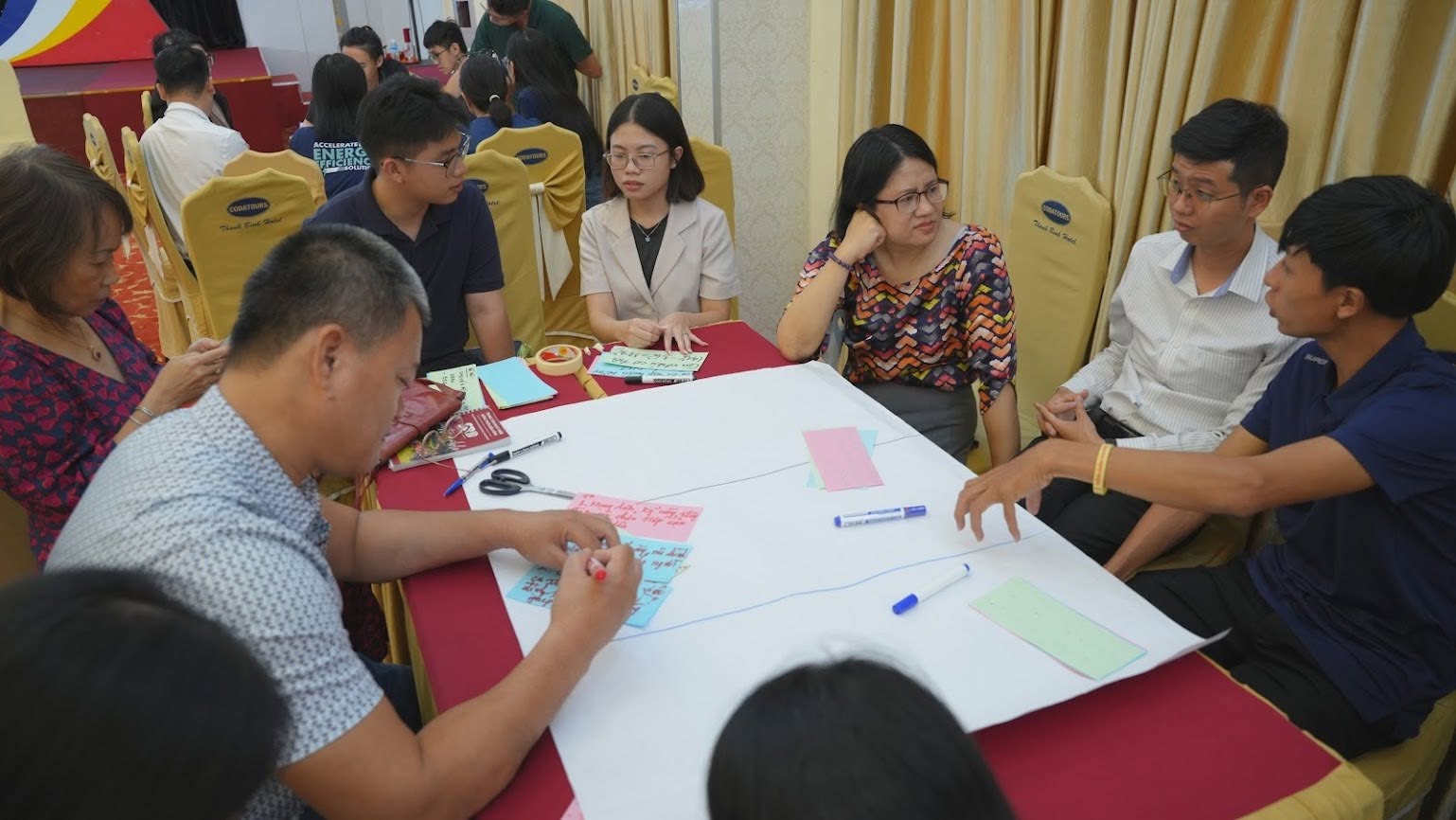
In the final session, participants were divided into three diverse discussion groups to explore opportunities, challenges, and solutions for promoting green jobs and creating more opportunities for workers, particularly vulnerable groups within communities.
Key opportunities highlighted included the significant untapped potential of Vietnam’s green labor market, with approximately 37.4% of its potential yet to be developed. At the same time, the Government’s Net Zero commitment is creating a favorable legal framework for businesses and social organizations in Da Nang to engage more deeply in sustainable value chains.
However, participants also identified major challenges, particularly the skills gap among workers, including limitations in soft skills, technical expertise related to ESG and EPR, as well as systems thinking skills required by the rapidly evolving green labor market.
To address these challenges, participants proposed several solutions, including promoting the “Three Stakeholders” collaboration model: the Government (developing legal frameworks), educational institutions (updating training curricula), and businesses (commissioning training and recruitment). Other proposed solutions included developing specialized sign language systems to ensure equal access to green job opportunities for people with disabilities, as well as strengthening digital communication efforts to raise public awareness about low-emission lifestyles and production practices.
Green transition and green development are not simply about the color “green” in a literal sense, but also about a commitment to conserving natural resources and the environment so that future generations can continue to benefit from and sustainably develop them.
With the support of FES, the Union of Science and Technology Associations, and social organizations both domestically and internationally, CAB will continue working alongside Da Nang and other localities in advancing green transition and sustainable development.